





.webp)
.webp)
The Mid-Upper Arm Circumference (MUAC) tape market is experiencing rapid growth across low- and middle-income countries (LMICs). This growth is primarily driven by expanding maternal and child health (MCH) programs. UNICEF, WHO, and NGOs now widely recognize MUAC tapes as essential frontline tools. These tapes enable rapid malnutrition screening in communities with limited healthcare access. Global demand is projected to increase by 15-20% annually through 2030. This surge is largely fueled by national health initiatives in Africa and South Asia. These regions face high malnutrition rates, especially in crisis zones like refugee camps and drought-affected areas.
Market Dynamics and Demand Drivers
Rising Acute Malnutrition Rates: In regions like Pakistan, maternal anemia increases child malnutrition risk by 2.6 times (AOR=0.38). Traditional practices like ghutti (herbal prelacteal feeds) further worsen outcomes. These practices reduce exclusive breastfeeding rates to just 11.3%.
Emergency Nutrition Protocols: UNHCR mandates MUAC tapes as the primary tool for rapid malnutrition screening during humanitarian crises. Their speed (54 seconds per measurement) and simplicity make them indispensable. This is especially true when scales/stadiometers are unavailable.
Bulk Procurement Models: Cost Efficiency at Scale
Large-scale purchases (≥5,000 units) significantly reduce costs. They make MUAC tapes accessible for LMIC health systems:
UNICEF/WHO Pooled Procurement: Agencies consolidate orders across multiple countries. This achieves 40-50% cost reduction (e.g., $0.50/tape vs. $1.20 retail).
Government Tenders: National programs (e.g., India’s POSHAN Abhiyaan) use bulk tenders. Minimum orders of 5,000–10,000 units ensure supply for district-level health workers.
NGO Partnerships: Organizations like Clinton Health Access Initiative (CHAI) negotiate directly with manufacturers. For example, they facilitate orders for 20,000+ tapes. These then distribute across community health networks in Mali and Nigeria.
Regional Market Insights
South Asia: Pakistan’s Lady Health Workers (LHWs) use MUAC tapes to screen 371 children per 253 mothers. They integrate cultural practices into nutrition counseling. This approach addresses ghutti-related malnutrition risks.
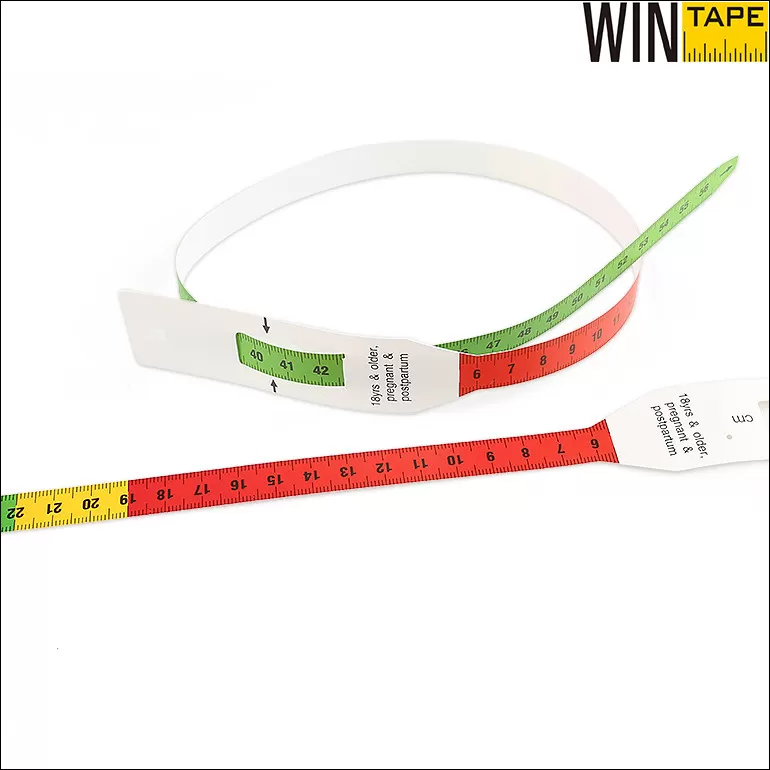
Sub-Saharan Africa: Refugee camps report 48% thinness (MUAC <23 cm) among women. This necessitates continuous screening. Bulk procurement here is coordinated by UNHCR. They use standardized tapes with color-coding (red: <21 cm, yellow: 21–23 cm, green: >23 cm).
Future Outlook and Strategic Recommendations
Sustainability Pressures: Recyclable MUAC tapes are emerging. However, they currently cost 20% more than standard PP versions. This limits LMIC adoption until subsidies are implemented.
Our muac tape printing machine has flexible custom printing capabilities and can print any muac tape measure scales, size and color according to the user's ideas without paying extra mold costs.


Wintape Measuring Tape Company
Custom Tape Measure Manufacturers
For All Your Measuring and Promotional Needs.
86-18588000509
cici@tape-measure.com
Custom Tailor Measuring Tape
Custom Body Measuring Tape
Custom Paper Measuring Tape
Custom MUAC Tape
Custom Wound Ruler
Custom Diameter Pi Tape
Custom Digital Tape Measure Laser
Custom Adhesive Measuring Tape
Custom Mini Tape Measure
Custom Horse Weight Tape
Custom Stainless Steel Tape Measure
Custom Long Tape Measure
Custom Measuring Tape
© 2025 Wintape Tape Measure Co.,Ltd | Privacy Policy | Sitemap | Contact Us | Powered by matchPages